
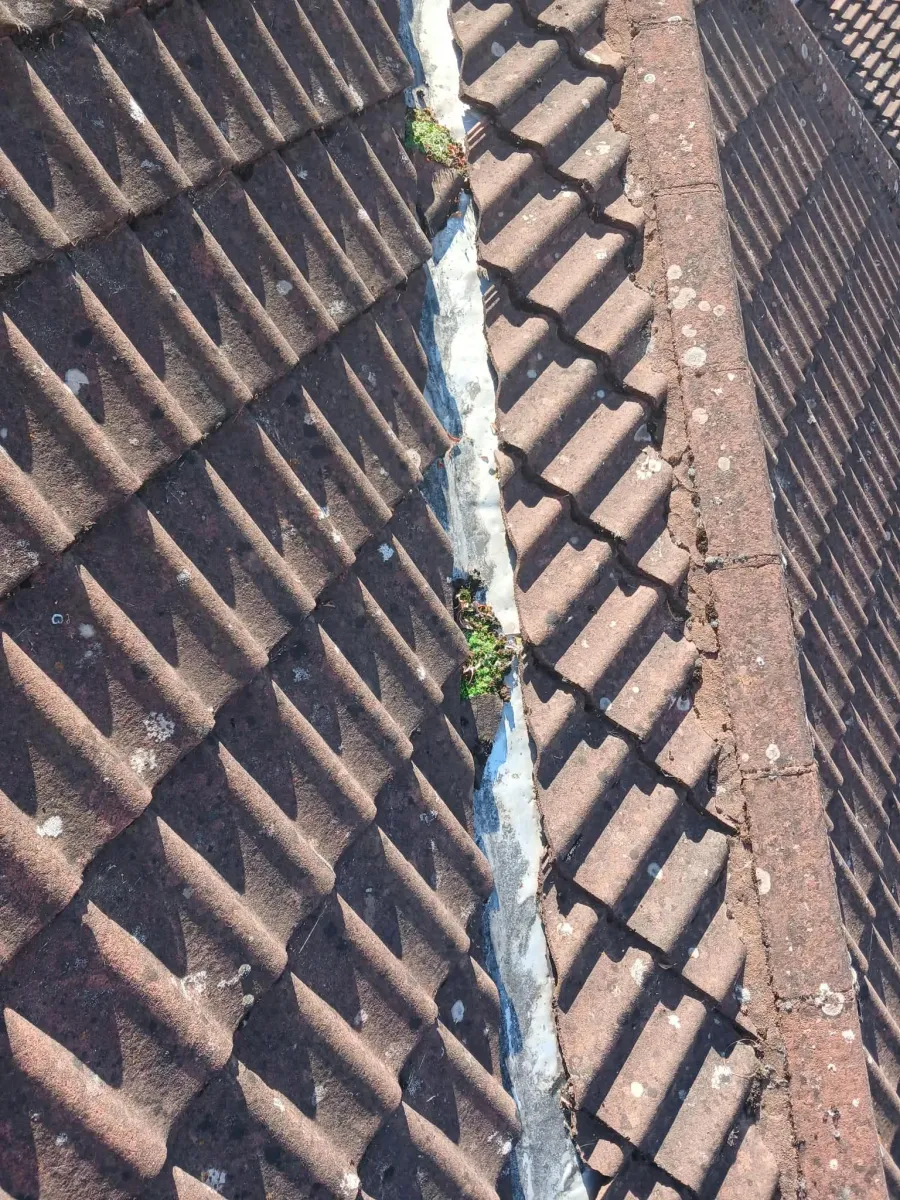
Lead flashing and chimneys in Cork.
Roofs rarely fail in the middle of a slope. They fail where they meet something else: a chimney, a gable wall, a dormer, a valley. That is where Roofers Cork spend most of their time.
Where a roof meets a wall
A roof covering is built to shed water downhill. A wall is built to stand still. Where the two meet, the junction has to cope with different materials moving at different rates, with the sun on one and the rain on the other. A gap you could not fit a pencil into will let in a damp patch the size of a dinner plate.
Lead is the traditional answer, because it can be dressed into the shape of the junction and stays watertight when the surface moves. It is laid in steps up a chimney, tucked into a chase in the brick and dressed over the slates below. When it fails it is usually because it was fixed badly, or because the chase has crumbled, or because the lead has fatigued at a fold. Pointing with sealant over the top is a stopgap and not a repair.
A chimney has more going on than the flashing. The stack itself can lose its pointing, the flaunching around the pot cracks, the render lets in water and the brickwork behind it holds the damp. Roofers Cork study the whole stack, inside the roof space and out, flue included, because a leak at a chimney is often several small faults acting together.
Valleys are the third place where roofs meet. A valley collects water from two slopes and passes it down a narrow channel, so moss, leaves and a worn lining all matter. Whether it is lead, a GRP liner or a proper rebuild, the aim is a channel that carries water to the gutter. Our 10-year written guarantee covers the workmanship.
Work at the joins of a roof.
Chimney flashings
Old lead is removed and the chimney is flashed again in step form, with a tray where the stack meets the slope above it.
Wall and abutment flashings
Lead tucked into a chase in the wall and dressed over the roof covering, for gables, extensions and party walls.
Stack repairs
Repointing, repairs to the render and new flaunching around the pots.
Valleys
Valley linings renewed in lead or other material, and channels cleared and re-formed to carry water to the gutter.
Pot and cowl work
Pots re-bedded where loose and cowls fitted where the flue allows, priced after seeing the stack.
Dormer and parapet detail
Cheeks, sills and parapet tops flashed so water cannot run behind them.
On every job, what the price covers.
Every quotation is a fixed price, so the final bill matches it.
Included in every job
Quoted separately
What this usually costs.
Chimney repairs are guided at €800–€3,500 plus VAT for 2026 and usually take one to three days, while a valley that has to be rebuilt starts at €1,200 and reaches €4,500, taking two to four days. A simple flashing renewal sits towards the lower end. The price you pay is the fixed one written after the survey.
From first visit to hand-back.
Trace the damp
Damp is traced uphill, then the flashing, pointing and stack are examined.
Written price
The faults we found, the work to fix them and a fixed price.
Strip and re-flash
Old lead and sealant are removed, the chase is made good and new lead is dressed in.
Water check
We check the finished junction with you and hand over the guarantee.
Questions, answered.
What does chimney work cost?
Chimney repairs are guided at €800 to €3,500 plus VAT for 2026. A fixed price follows once the job has been seen.
Why not just seal the join with sealant?
Sealant shrinks and cracks within a year or two, and it hides the true state of the chase. It is a temporary measure and not a repair.
What is Code 4 or Code 5 lead?
A thickness grade for rolled lead sheet. Code 4 and Code 5 are the weights commonly used for flashings, with the choice depending on the position and how much the lead will be dressed.
Can Roofers Cork repair the chimney itself?
Yes. Repointing, render, flaunching and pots can be done as part of the job. A stack that has moved or needs rebuilding is priced after the survey.
My chimney is not used. Does it still need work?
Yes, if it is leaking. Disused flues also need to be vented, so capping a pot has to be done with care. We tell you what is advisable once we have seen it.
Do you work on period roofs?
Yes. Older roofs often have detail that suits traditional lead work, and we match it. Heritage property figures are in the replacement page.
More roofing services.
Roof Inspections
A written, photographed report on the state of the roof, taken from the attic and from the slope.
Re-felting & Battening
The membrane and battens under your slates wear out before the slates do. We renew them and relay what you have.
Emergency Roof Repair
A live leak or storm damage: the opening made watertight today, the proper repair planned once it is dry.
Roofers Cork cover Cork city and county. The survey is free, the price is fixed in writing, and the work carries a written guarantee.
Get your roof
looked at.
Write a line or two about the roof and where it is. After a free survey you get a plain written price. Rather talk it through? Ring: